


Standing Desk vs. Duduk 8 Jam: Ungkap Fakta Kesehatan Berdasarkan Studi

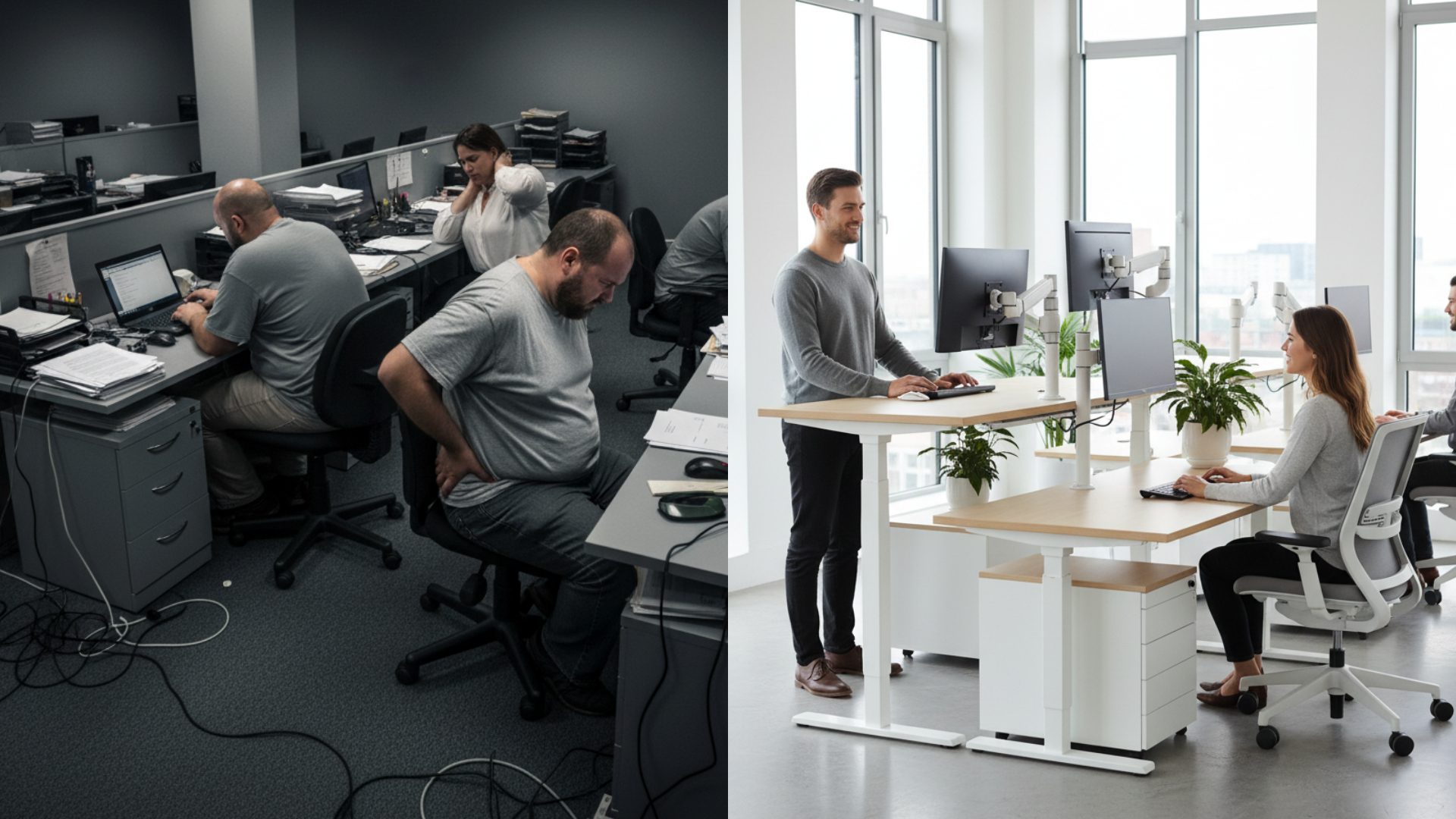
PT Murni, Jakarta – Research reveals that choosing a standing desk over long hours of sitting could drastically change how your body feels and functions. What happens to your health when you sit all day though?
The Risks of Sitting 8 Hours a Day
Many office workers spend at least eight hours a day at a desk, often without realizing the effect on their bodies. Plenty of studies show that sitting for long stretches—especially without much physical activity—is more than just uncomfortable.
For example, one large research involving over 1 million people found these risks are comparable to those from obesity or smoking.
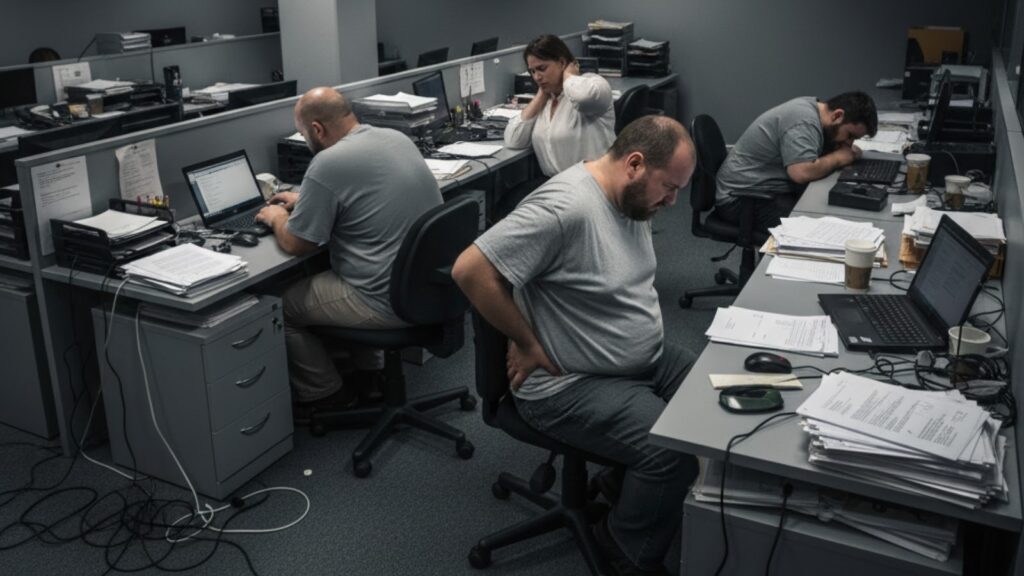
Prolonged sitting with little movement also correlates with higher chances of musculoskeletal pain (back, shoulders, knees) and mortality risks such as heart disease, type 2 diabetes, dementia, hypertension, cancers, and mental health issues.
Importantly, even folks who do regular exercise still face risks if they sit too much, meaning physical activity alone doesn’t fully offset sitting’s harms.
Standing Desks: What Research Really Shows
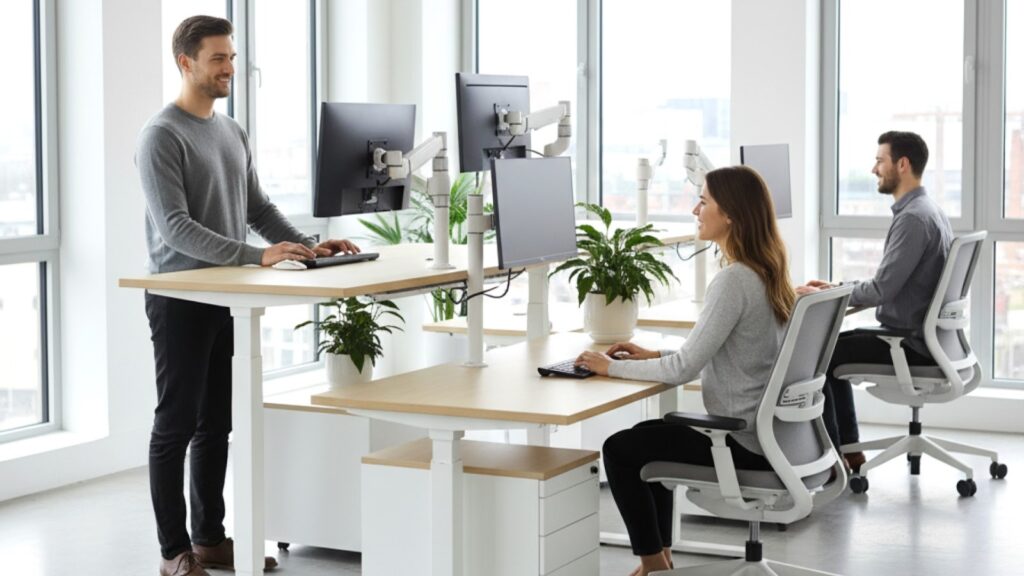
Using a standing desk can bring measurable improvements to your health, comfort, and energy—when used wisely. Here’s what research says:
- Less Sitting Time
Sit-stand desks can cut sitting time by 65–80 minutes per day. A study shows 17% reduction in overall sitting over a year, along with reduced neck, shoulder, and back discomfort. - Reduced Pain
People who use standing desks report less back pain and muscle fatigue, along with better posture and a lower risk of musculoskeletal disorders. - Higher Productivity
Alternating between sitting and standing helps people process information more efficiently and stay engaged during tasks—especially shorter or easier ones. - Healthier Blood Sugar
Standing for 180 minutes after meals can reduce blood sugar spikes by 43%, and long-term use may improve insulin sensitivity and triglyceride levels. - Better Mood and Energy
Research shows that less sitting can improve mood, reduce anxiety, and boost energy levels throughout the day.
Overall, the science is clear: prolonged sitting harms your health, but standing all day isn’t the solution either. The key is balance—switch between sitting and standing, move often, and listen to your body.
With mindful use, a standing desk can help create a healthier and more dynamic workspace. Light physical activity for at least 60–75 minutes a day can also help reduce the health risks of prolonged sitting.
Breaking Sedentary Time with Standing Desks
The key takeaway from this research is ‘a standing desk isn’t a one-size-fits-all magic fix, but it’s a helpful tool when used smartly’. Here is how to get the most benefit:
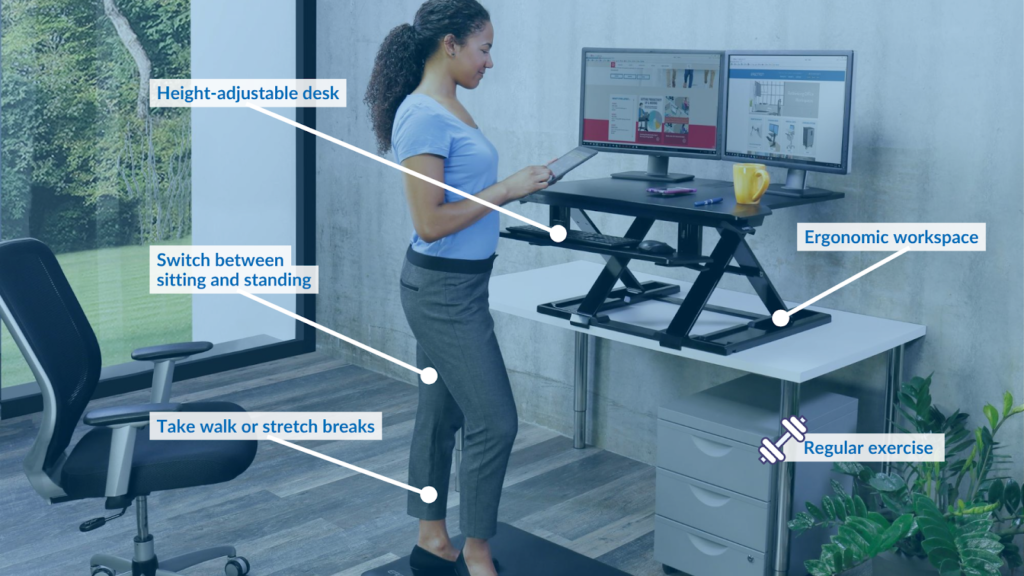
- Use a height-adjustable desk so you can switch between sitting and standing.
- Try 30–60 minutes standing, then return to sitting.
- Take walking or stretch breaks every 20–30 minutes.
- Set up an ergonomic workspace—monitor at eye level, keyboard at proper height, avoid hunching. Check out recommended products here!
- Combine with regular moderate exercise outside work.
Research proves that standing desk helps break unhealthy sitting habits and supports a healthier, more energized workday.
REFERENCES
ergonomic.co.id
mayoclinic.org
gov.uk
healthline.com
pmc.ncbi.nlm.nih.gov
tandfonline.com
onlinelibrary.wiley.com
journals.lww.com
pubmed.ncbi.nlm.nih.gov
journals.sagepub.com
pmc.ncbi.nlm.nih.gov


